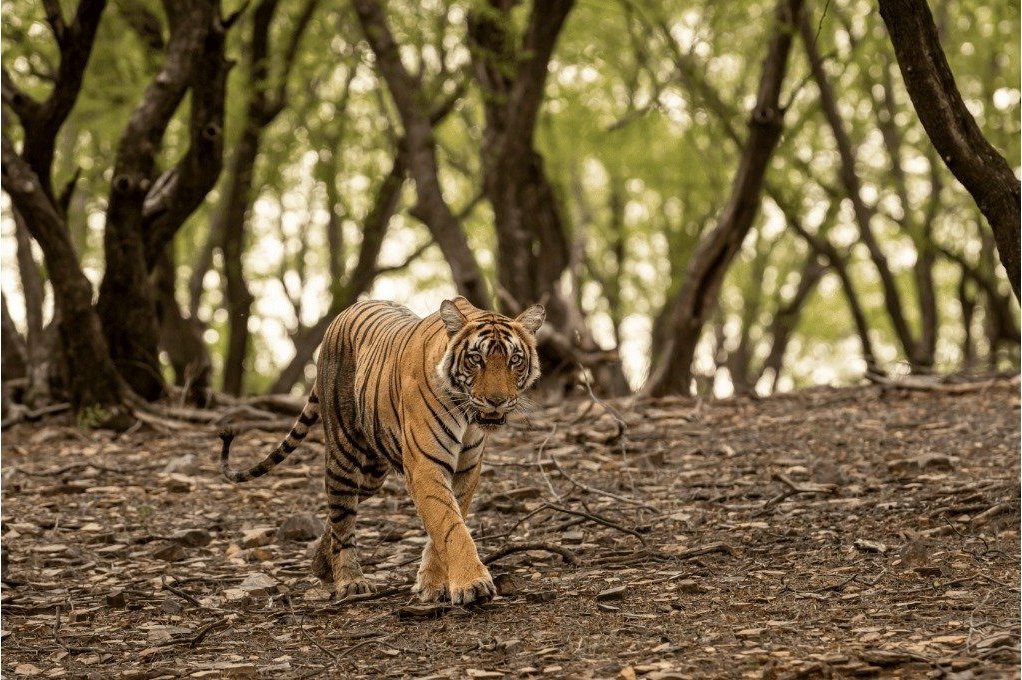
Ranthambore is one of the best places in India for Ranthambore tiger photography, but tigers move quickly and the light changes fast. These tips cover what to bring, what the park allows and how to shoot without disturbing the animals. They work for both a Jeep and a Canter safari.
Quick answer
Bring a camera with a telephoto zoom, leave the flash at home, book a morning or evening safari for better light, use burst mode, and be patient. Ask your guide before stopping for a long photo session. Good photos come from a calm, respectful drive.
What the park allows
Personal cameras, DSLRs and mirrorless cameras with telephoto lenses are generally permitted. Flash photography, drones and remote-controlled aerial devices are not allowed. Professional video equipment and tripods usually need prior written permission. Rules can change, so confirm the current permissions with our team before you travel. Our Ranthambore safari booking guide explains the booking steps and what to carry.
Choose the right lens
A telephoto zoom is the most useful lens for a tiger safari. Many photographers use a 100 to 400mm or 200 to 500mm zoom, which gives enough reach for animals at a distance and still works for wider scenes. For birds, a longer lens helps. Our safari gear checklist covers lenses, bags and clothing in more detail.
Camera settings for moving animals
Use a fast shutter speed to freeze movement, and raise the ISO when the light is low. Shutter priority mode is a good starting point. Switch on continuous autofocus and burst mode, so you capture the moment when a tiger turns or steps out of the grass. If your camera has animal or eye detection, use it. Never use flash, because it disturbs the animals.
Best light and timing
Early morning and the last hour before sunset give warm, soft light, which suits tiger portraits. Midday light is harsh and makes stripes look flat. Morning safaris also tend to be quieter. Check the park timings and closing days before you plan your shoot, and read the best time to visit Ranthambore guide to choose a season.
Jeep or Canter for photography?
A Jeep (6 seats) is more flexible, so you can follow movement and reposition for a better angle. A Canter (20 seats) gives a higher viewpoint over tall grass, which helps when a tiger is hidden in the grass. Our Jeep vs Canter safari guide compares both options. Compare the safari packages to find the one that suits your photo plans.
Keep the shots steady
Inside a vehicle, a tripod is often not practical. Use a beanbag or rest your lens on the vehicle's edge. Keep your camera covered between shots to protect it from dust. Do not lean out of the vehicle, and do not stand up suddenly when an animal is close.
Shoot ethically
Stay seated, keep noise low and avoid loud camera clicks when an animal is resting. Do not block other vehicles, and never pressure your driver to chase a tiger for a shot. Respecting the animal's space gives you more natural behaviour to photograph, and it protects the wildlife for future visitors.
Zones and sightings
Zones are allotted by the Forest Department and cannot be guaranteed, so think about your shot list before you book. The best zone for Ranthambore safari guide explains the core routes. The zones 6 to 10 safari guide is useful for birds and open landscapes. Our history, zones and wildlife page explains which animals share the forest with tigers.
Famous tigers and photo ideas
Before you go, read about the famous tigers of Ranthambore and the tigers of Ranthambore guide to understand the animals you may see. Plan a few shots beyond tigers too, such as deer, birds and forest scenes. Our jungle safari bucket list has more ideas, and our birds of Ranthambore National Park guide is useful for bird shots.
Plan your photo safari
Start with our Ranthambore National Park overview. Sightings are never guaranteed, so many photographers book more than one safari. Read our first-timer tips for the basics, then plan your trip with the how to reach Ranthambore National Park guide. For a stay near the park, see hotels and resorts. Our Ranthambore Fort and Trinetra Ganesh Temple guide is a good addition for landscape shots outside the park.
Photography checklist
- Camera with a telephoto zoom lens, spare batteries and memory cards
- Lens cloth and a dust cover for the camera
- Burst mode and continuous autofocus set before the drive
- Flash turned off
- Booking ID and confirmation ready
Ready to plan your shoot?
Our team can help you choose the right safari and answer questions about permissions. Contact Wildaddis before your trip, and see the Ranthambore National Park highlights to plan your visit.