
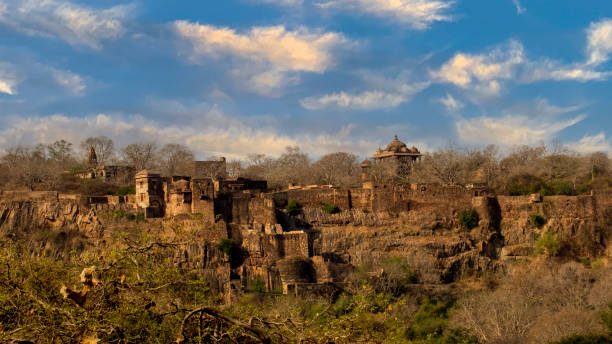
Rising above the jungle of Ranthambore National Park, Ranthambore Fort is over a thousand years old and one of the most powerful forts in Rajasthan's history. At its top sits the beloved Trinetra Ganesh Temple. Here's the story of both — and how to fit a visit into your Ranthambore safari trip.
| Location | Inside Ranthambore National Park, Sawai Madhopur, Rajasthan |
|---|---|
| Built | Believed around 944 AD by the Chauhan Rajputs |
| Famous ruler | Rao Hammir Dev Chauhan (1282–1301) |
| UNESCO status | World Heritage Site since 2013 – “Hill Forts of Rajasthan” |
| Famous for | Trinetra Ganesh Temple, Hammir's palace, gates, chhatris and lake views |
1. Ranthambore Fort History
The fort stands on a steep hill in the middle of the forest, protected by cliffs and jungle on all sides. Its exact origin is debated, but it is widely believed that construction began around 944 AD under the Chauhan Rajputs, during the reign of King Sapaldaksha. Because it controlled routes between north and central India, the fort was fiercely fought over for centuries.
- 10th century – Foundation: the Chauhans build a hill fort that becomes the heart of the Ranthambore kingdom.
- 1282–1301 – Rao Hammir Dev Chauhan: the fort's golden age under Hammir Dev, remembered across Rajasthan for his courage and for keeping his word even at great cost.
- 1301 – Siege by Alauddin Khilji: the Sultan of Delhi besieged the fort. Hammir Dev died fighting, and the women of the fort performed jauhar — one of the earliest recorded in Rajasthan.
- 15th–16th century: the fort changed hands several times between regional rulers, including the Ranas of Mewar and the Hada Rajputs.
- 1569 – Mughal era: Emperor Akbar took the fort after a long siege, and it became part of the Mughal empire.
- 18th century – Jaipur: the fort passed to the Kachwaha Maharajas of Jaipur, whose hunting grounds around it later became the Sawai Madhopur Game Sanctuary (1955).
- 2013 – UNESCO: inscribed as a World Heritage Site with five other hill forts of Rajasthan.
2. What to See Inside Ranthambore Fort
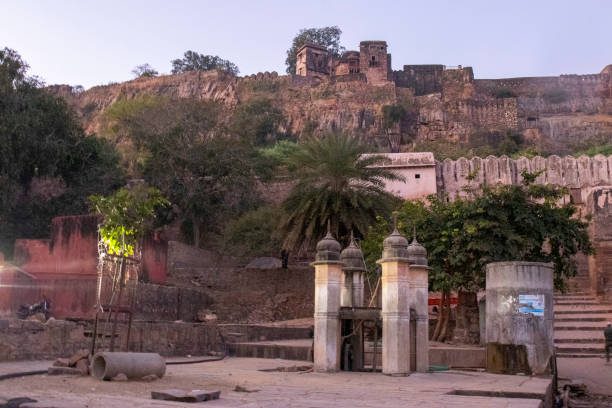
- Massive gates (Pols): the path climbs through gateways such as Naulakha Pol, Hathi Pol, Ganesh Pol and Andheri Pol.
- Hammir Mahal: ruins of King Hammir's palace, among the oldest surviving palaces in India.
- 32 Khambon ki Chhatri: a cenotaph supported by 32 pillars.
- Temples: the Trinetra Ganesh Temple, along with Jain temples of Lord Sumatinath and Lord Sambhavnath.
- Old water tanks and reservoirs: built to store rainwater during long sieges.
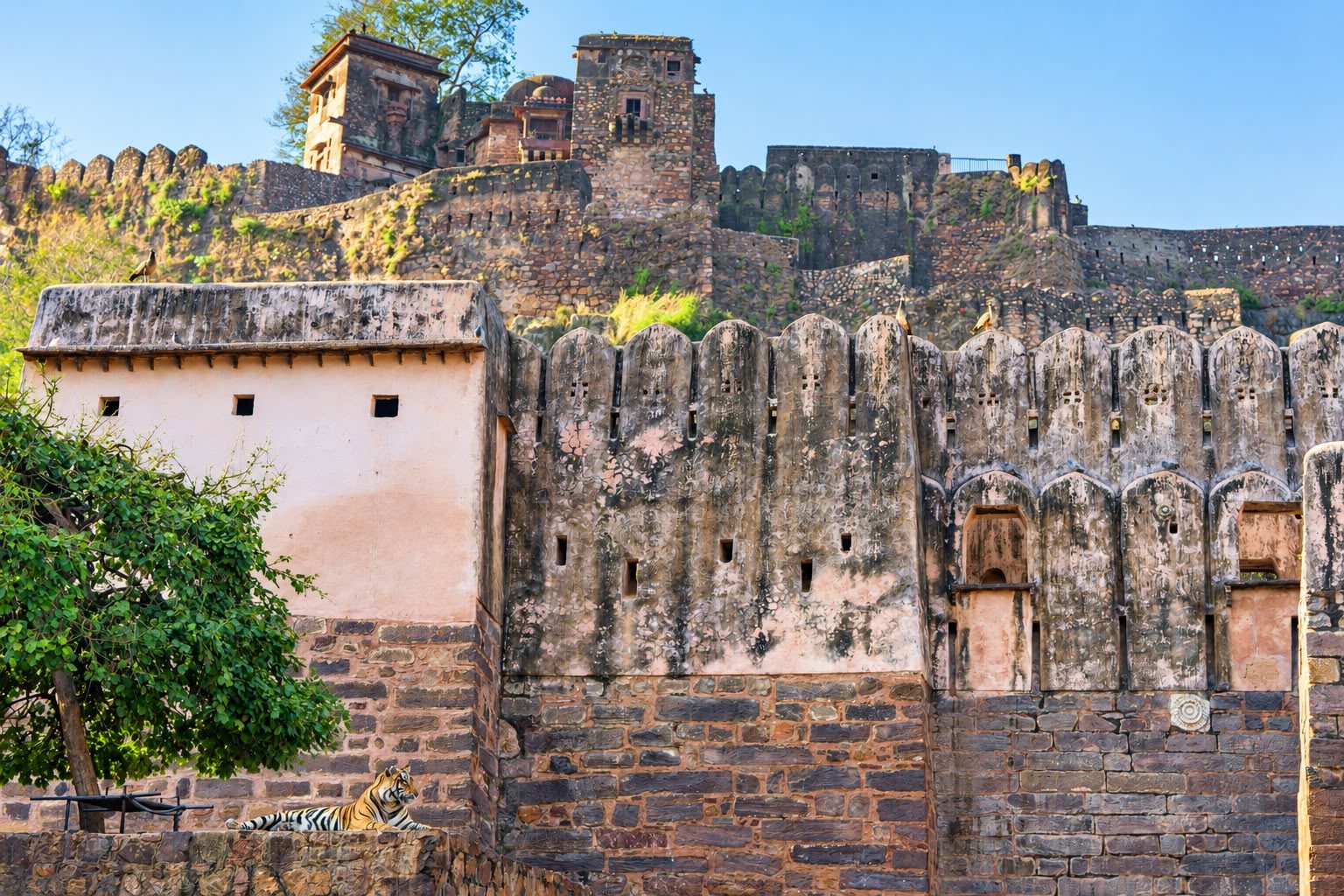
- Views: panoramic views over the forest and lakes like Padam Talao — and sometimes tigers resting near the walls.
3. Trinetra Ganesh Temple, Ranthambore
The Trinetra Ganesh Temple (Three-Eyed Ganesha) on Ranthambore Fort is one of the most revered Ganesh temples in Rajasthan, visited by lakhs of devotees every year.
The legend
According to local tradition, during Alauddin Khilji's long siege around 1299 AD, the fort's food stores began to run out. King Hammir Dev, a devotee of Lord Ganesha, prayed for help. Lord Ganesha is said to have appeared in his dream, and the next morning an idol of Ganesha with three eyes was found on a wall of the fort. Soon after, the crisis eased. Hammir Dev then built a temple at the spot.
What makes it special
- Three eyes (Trinetra): a symbol of wisdom and insight.
- The whole family: Lord Ganesha is worshipped with his consorts Riddhi and Siddhi, his sons Shubh and Labh, and his vehicle, the mouse — a rare form of Ganesha worship.
- Wedding invitations by post: families across India send the first wedding card to “Shri Trinetra Ganesh Ji, Ranthambore Fort, Sawai Madhopur” to seek blessings, and letters are delivered to the temple by post.
- Festivals: Wednesdays are especially busy, and a large fair is held around Ganesh Chaturthi.
4. Ranthambore Highlights at a Glance
- One of the best tiger reserves to see wild Bengal tigers in daylight — learn about the famous tigers of Ranthambore.
- UNESCO World Heritage fort inside a living forest.
- Dramatic landscape: cliffs, valleys, dry forest and lakes like Padam Talao and Rajbagh.
- Jogi Mahal and one of India's largest banyan trees.
- Trinetra Ganesh Temple, a pilgrimage site for centuries.
- 10 safari zones — see the full Ranthambore safari zones guide.
- Season: 1 October to 30 June, with the best tiger sightings from March to June — see the best time to visit Ranthambore. Meet the big cats in Tigers of Ranthambore.
5. Tips for Visiting Ranthambore Fort
- Plan it with your safari: visit the fort between a morning and an afternoon safari, or on a rest day. Book your safari early — seats sell out fast.
- Go early: mornings are cooler and less crowded, especially on Wednesdays and festival days.
- Wear good shoes and carry water: the climb includes many steps and uneven stone paths.
- Respect wildlife: the fort is inside a tiger reserve. Stay on the main path, move in groups and follow forest staff instructions.
- Check timings locally: entry timings and rules are set by the authorities and can change.
- Stay nearby: choose a resort close to the park from our Ranthambore hotels & resorts.
6. Frequently Asked Questions
Continue reading: Ranthambore National Park – history, safari zones, wildlife & famous tigers. Ready to go? Send us your dates on the contact page or book a Ranthambore jeep or canter safari. Foreign travellers can book a Tatkal separate jeep.
Book Your Ranthambore Tiger Safari
Local experts · Jeep & Canter · Tatkal & Premium assistance