
Ranthambore National Park in Sawai Madhopur, Rajasthan, is one of the best places in the world to see a wild tiger in daylight. This guide covers its history, safari zones, wildlife, trees, birds and famous tigers — everything you need before booking a Ranthambore tiger safari.
| Location | Sawai Madhopur, Rajasthan, India |
|---|---|
| National Park area | About 282 sq km (core, declared 1980) |
| Tiger Reserve area | About 1,334 sq km, including Sawai Mansingh and Keladevi sanctuaries |
| Landscape | Meeting point of the Aravalli and Vindhya hill ranges; dry deciduous forest, lakes and grasslands |
| Safari zones | 10 (Jeep & Canter) |
| Heritage | Ranthambore Fort – UNESCO World Heritage Site (2013) |
1. History of Ranthambore National Park
For centuries the forests around Ranthambore Fort were royal hunting grounds, most recently of the Maharajas of Jaipur. Its journey to becoming one of India's best-known tiger reserves happened in a few key steps:
- 1955 – Sawai Madhopur Game Sanctuary: the forest around the fort was declared a game sanctuary to protect wildlife from unregulated hunting.
- 1973 – Project Tiger: because of its important tiger population, the sanctuary was among the first reserves included in India's Project Tiger.
- 1980 – National Park: a core area of about 282 sq km was declared Ranthambore National Park.
- 1991 – Tiger Reserve expanded: the neighbouring Sawai Mansingh and Keladevi sanctuaries were added, taking the Ranthambore Tiger Reserve to roughly 1,334 sq km.
- 2013 – UNESCO World Heritage: Ranthambore Fort was inscribed as part of the “Hill Forts of Rajasthan”.
2. What is Ranthambore National Park famous for?
- Daytime tiger sightings: the open dry forest makes Ranthambore one of the most rewarding places in India to watch wild Bengal tigers.
- History meets wildlife: a 10th-century fort, old chhatris and ruins stand inside the jungle — tigers are often seen near them.
- Scenic lakes: Padam Talao, Rajbagh and Malik Talao attract tigers, deer, crocodiles and birds.
- Jogi Mahal & the great banyan: the old red-sandstone lodge on Padam Talao stands beside one of the largest banyan trees in India.
- Trinetra Ganesh Temple: a centuries-old temple on the fort, visited by devotees from across India — read our Trinetra Ganesh Temple guide.
- Rich biodiversity: 300+ plant species, 300+ bird species and 40+ mammal species.
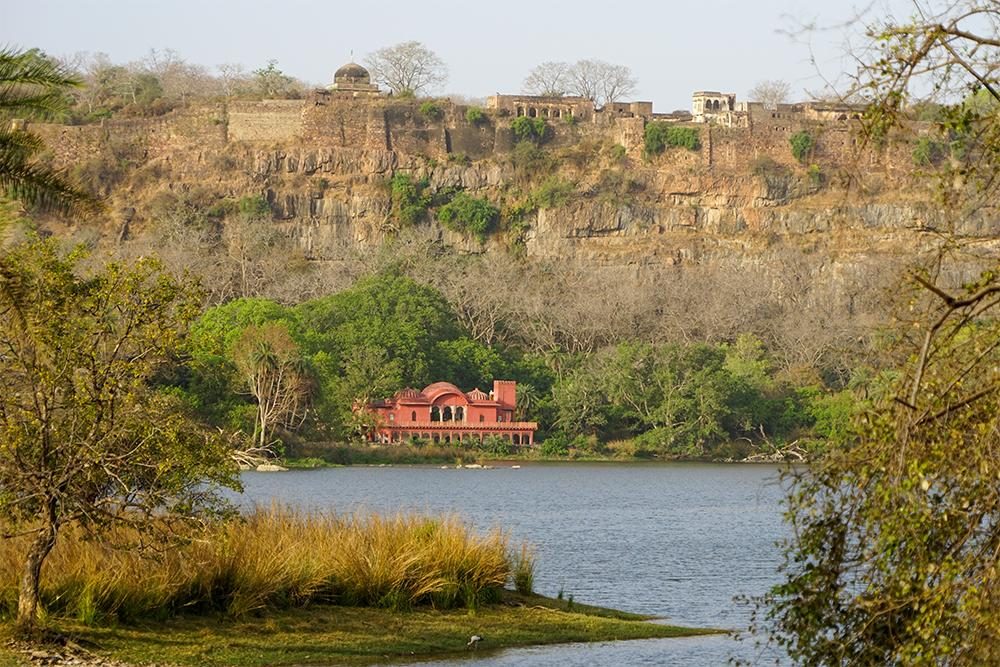
3. Ranthambore Safari Zones (Zone 1 to 10)
The park is divided into 10 safari zones to spread vehicles across the forest and protect wildlife. Your zone is allotted by the Forest Department at the time of booking, and each vehicle stays in its own zone for the whole safari.
| Zone | Main area | Key route points | Landscape |
|---|---|---|---|
| Zone 1 | Singhdwar | Amreshwar Dang, Tuti ka Nalla, Sultanpur, Gada Dub, Peela Pani | Dry forest, rocky nullahs, water holes |
| Zone 2 | Jogi Mahal | Jhalra, Kamaldhar, Amrai, Phoota Bandha, Guda | Dense forest, springs and water holes |
| Zone 3 | Padam Talao | Padam Talao, Rajbagh, Mandook, High Point | The famous lakes with views of the fort |
| Zone 4 | Malik Talao | Tamakhan, Malik Talao, Lakarda, Berda, Semli, Adidaant | Lakes, streams and Dhok forest |
| Zone 5 | Kachida | Jokha, Kachida Valley, Dhakda, Baghda, Bakola, Anantpura | Hills and valleys; leopards and sloth bears |
| Zone 6 | Kundal | Palli Darwaza, Kundal, Patwa Baori, Sonkach, Kala Pani | Open grasslands with hill backdrops |
| Zone 7 | Chidikho | Chidikho, Jamoda, Kushalipura | Quieter mixed forest |
| Zone 8 | Balas | Balas, Neemli Dang, Kali Bhat, Kherai, Mahakho | Rugged hill slopes and rock formations |
| Zone 9 | Kuwalji | Kuwalji area, along the Chakal river | Remote forest and river banks |
| Zone 10 | Aantri | Kushalipura, Bodal, Halonda, Banskhori, Aantri | Hilly tracks and water bodies; good birding |
Route points are indicative and may be changed by the Forest Department.
Core zones vs outer zones
Zones 1–5 are the original tourism zones around the lakes and the fort. Zones 6–10 were added later in the outer parts of the reserve and offer more open, less crowded landscapes. Please note: Zones 01–05 are closed on Wednesdays and Zones 06–10 are closed on Tuesdays.
Which is the best zone for a Ranthambore safari?
There is no single “best” zone — tigers move between territories and sightings change every season. Zones 2, 3 and 4 are known for lakes and classic scenery, but excellent sightings are also reported from the outer zones. Our advice: book two or more safaris, and book early. See our Ranthambore safari booking guide for advance, Tatkal and Premium quota dates. Foreign guests can also book a Tatkal separate jeep.
4. Wildlife of Ranthambore
Ranthambore sits where the Aravalli and Vindhya ranges meet. This mix of hills, dry forest, grassland and lakes supports a remarkable variety of animals.
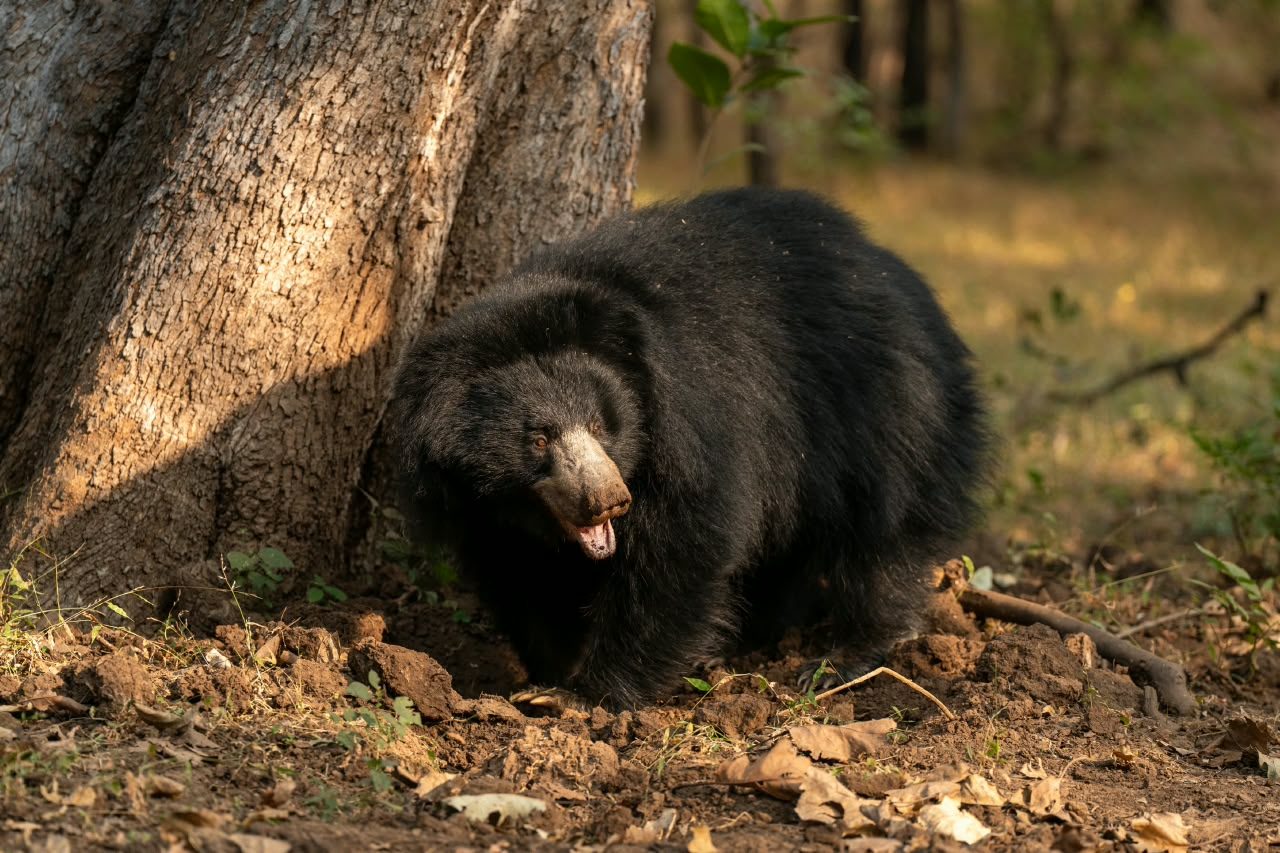
- Big cats & predators: Royal Bengal Tiger (Panthera tigris tigris), Indian Leopard, Striped Hyena, Sloth Bear, Jungle Cat, Golden Jackal and the rarely seen Caracal.
- Deer & antelopes: Sambar (the tiger's main prey), Chital or Spotted Deer, Nilgai, Chinkara and Wild Boar.
- Reptiles: Mugger (marsh) crocodiles in the lakes, freshwater turtles, monitor lizards and snakes such as the Indian Rock Python.
5. Trees & Flora of Ranthambore
Ranthambore is mainly tropical dry deciduous forest with patches of scrub and grassland, home to around 300 plant species.
- Dhok (Anogeissus pendula): the dominant tree, covering a large part of the forest; its leaves are important fodder for sambar and nilgai.
- Banyan (Ficus benghalensis): the giant banyan beside Jogi Mahal is one of the largest in India.
- Pipal (Ficus religiosa): common near water and old ruins.
- Flame of the Forest / Chhila (Butea monosperma): turns the forest orange-red in early spring.
- Neem, Khair, Ber, Jamun, Mango, Tamarind and Tendu: fruiting trees such as Ber and Tendu are a favourite of sloth bears.
- Khus grass (Vetiveria zizanioides): grows along lake edges, known for its fragrant roots.
6. Birds of Ranthambore
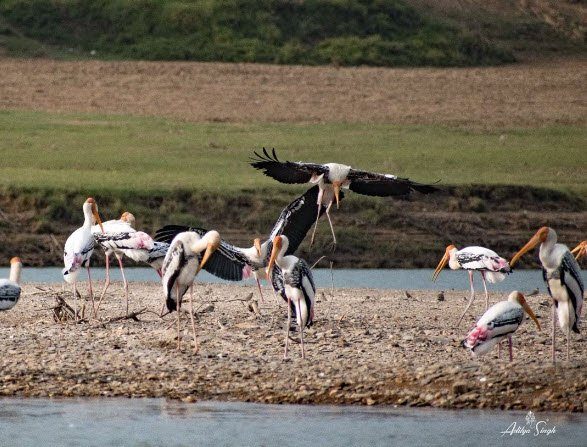
With more than 300 recorded bird species, Ranthambore is a favourite of bird watchers. Winter (October to March) is especially good, when migratory birds arrive at the lakes.
| Group | Birds you may see |
|---|---|
| Birds of prey | Crested Serpent Eagle, Changeable Hawk-Eagle, Indian Vulture, Indian Eagle-Owl, Brown Fish Owl |
| Water birds | Painted Stork, Black-necked Stork, Woolly-necked Stork, Eurasian Spoonbill, Bronze-winged Jacana, Pied Kingfisher |
| Forest birds | Indian Pitta (summer), Rufous Treepie, Indian Roller, Indian Paradise Flycatcher, Indian Golden Oriole, Sirkeer Malkoha |
| Ground birds | Indian Peafowl (national bird), Painted Sandgrouse, Grey Francolin, Jungle Bush Quail |
7. Butterflies of Ranthambore
Flowering trees, scrub and lake edges also support many butterflies, which are important pollinators. Common species include the Pioneer (Caper White), Common Grass Yellow, Lemon and Mottled Emigrant, Plain Tiger, Blue Tiger, Common Crow, Lemon Pansy, Peacock Pansy, Common Mormon, Lime Butterfly, Zebra Blue and Common Pierrot.
8. Famous Tigers of Ranthambore
Every tiger in Ranthambore gets a “T” number based on its unique stripe pattern, and many are also given names by guides and photographers. These are some of the best-known tigers in the park's history:
| ID | Name | Why famous |
|---|---|---|
| T-16 | Machli | “Lady of the Lakes”, probably the world's most photographed tigress; famous for fighting a large mugger crocodile. Died in 2016. |
| T-17 | Sundari | Daughter of Machli who once held part of the lake territory. |
| T-19 | Krishna | Daughter of Machli; took over the lakes and raised Arrowhead (T-84), Lightning (T-83) and Pacman (T-85). |
| T-24 | Ustad | A large dominant male; moved out of the park to Sajjangarh Biological Park, Udaipur, in 2015. |
| T-25 | Zalim | Male known for raising two orphaned cubs — very rare behaviour for a male tiger. |
| T-28 | Star Male | Named after a star-shaped mark on his face; a well-known male of the core zones. |
| T-39 | Noor | A well-known tigress of Zones 1, 2 and 6, mother of several litters. |
| T-84 | Arrowhead | Granddaughter of Machli, named for an arrow-shaped mark on her forehead; ruled the lakes. Died in June 2025. |
| T-124 | Riddhi | Daughter of Arrowhead, often seen with her sister Siddhi around the lakes. |
Tiger territories change often and sightings are never guaranteed. Read more in Discover the Majestic Tigers of Ranthambore.
9. Best Time to Visit Ranthambore
The main safari season runs from 1 October to 30 June. October to March is pleasant and great for birds, while March to June is hot but usually gives the best tiger sightings, as animals stay close to water. During the monsoon (July–September) the core zones are closed. Details in our best time to visit Ranthambore guide.
10. Frequently Asked Questions
Planning your trip? Explore Ranthambore National Park, compare safari packages, find a stay in our Ranthambore hotels & resorts, and visit the Ranthambore Fort & Trinetra Ganesh Temple on your rest day. Contact Wildaddis for help with bookings.
Book Your Ranthambore Tiger Safari
Local experts · Jeep & Canter · Tatkal & Premium assistance